
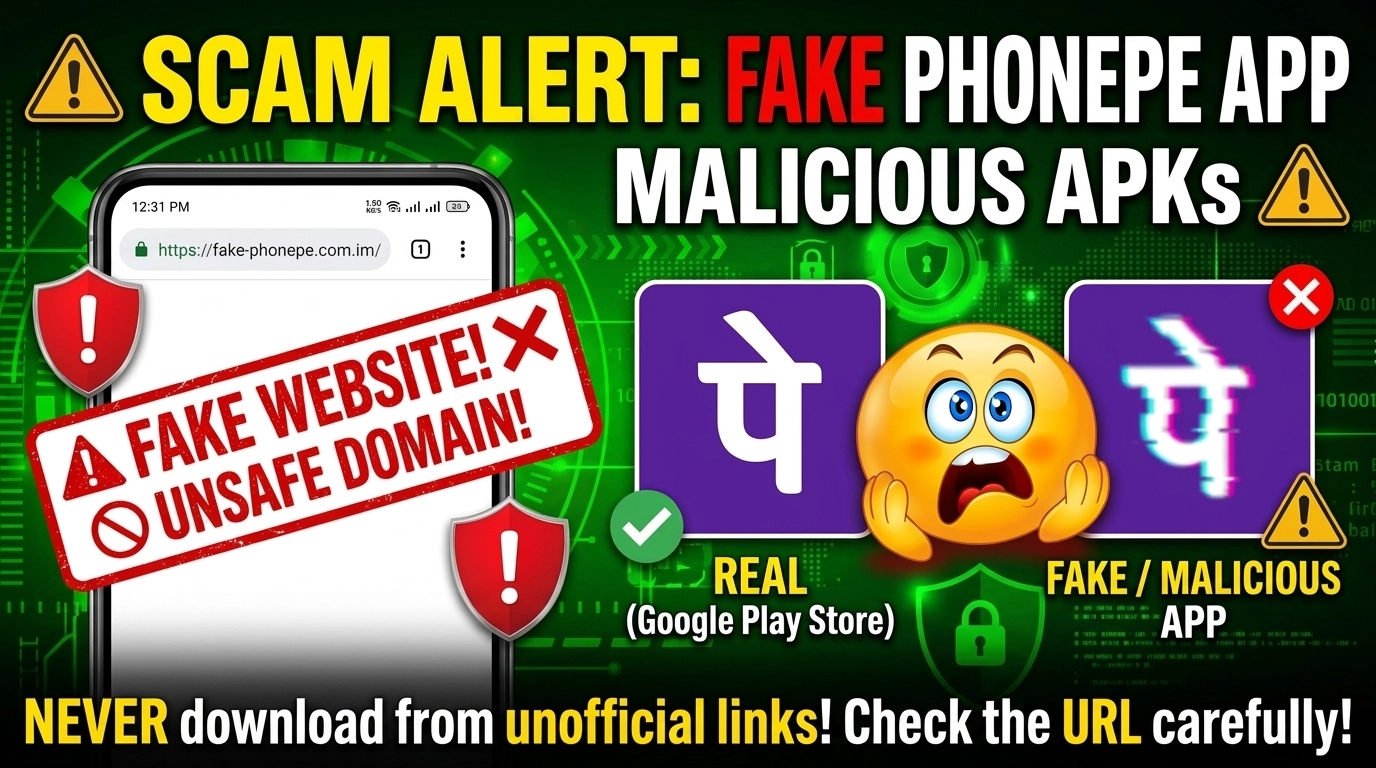
| Download Info | Details |
| App Name | Fake PhonePe APK |
| App Type | Unofficial / Fake App |
| Platform | Android |
| File Format | APK |
| Price | Free |
| Main Risk | Fake Payments & Data Theft |
| Safety | Not Recommended |
Fake PhonePe App
Fake PhonePe is a term commonly used to describe unofficial applications or demonstration interfaces that imitate the appearance of digital payment services. These tools may display sample payment screens, transaction details, or confirmation messages, but their appearance does not mean that a genuine financial transaction has occurred. Understanding the difference between an imitation interface and an authentic payment application is important for Android users, customers, and business owners.
This guide explores common features, possible uses, compatibility considerations, security risks, and payment verification methods. It also explains how to approach unfamiliar applications responsibly and identify safer alternatives for educational demonstrations and interface testing.
What Is a Fake PhonePe App?
A Fake PhonePe app generally refers to an unofficial application that resembles parts of the PhonePe payment interface. Depending on its design, it may reproduce the appearance of a digital wallet without connecting to a real payment network or bank account.
Some imitation interfaces are created for demonstrations, while others may be used to mislead people into believing that money has been transferred. Therefore, the purpose and source of an application should always be considered before use.
Common characteristics may include:
- Payment-style screens with sample transaction information.
- Simulated confirmation messages.
- Illustrative payment histories.
- Layouts designed for smartphone displays.
- Unofficial branding that resembles a recognized payment service.
These elements are not proof of financial activity. A genuine transaction must be verified through the recipient’s official payment application or banking service.
Main Features and Interface Elements
The features of a Fake PhonePe interface depend on the particular application or demonstration tool. Some focus on visual design, while others provide sample screens for learning about digital payment workflows.
Common interface elements may include:
- Payment screens: Illustrations of how a payment interface may be organized.
- Sample transaction details: Fictional amounts, dates, and recipient information.
- Confirmation displays: Messages that resemble successful payment notifications.
- Mobile-friendly layouts: Designs adapted to different smartphone screen sizes.
- Demonstration records: Sample entries that explain how transaction histories are presented.
These features can make an imitation interface look convincing, but they do not establish that a transfer has taken place. Users should avoid treating displayed balances, reference numbers, or success messages as independent evidence of payment.
Common Uses and Intended Purposes
The purpose of a Fake PhonePe interface varies according to its creator and implementation. A clearly labelled demonstration can help explain interface design, whereas an application used to misrepresent a payment can create serious problems.
Possible educational or development-related uses include:
- Interface demonstrations: Showing how digital wallet screens are arranged.
- Software design: Evaluating sample layouts before developing a legitimate application.
- Fraud awareness training: Teaching employees why screenshots are not reliable payment evidence.
- Usability testing: Examining whether sample payment screens are easy to understand.
Any demonstration should use fictional information and be clearly marked as a simulation. Presenting a mock confirmation as genuine proof of payment can mislead another person and may result in financial or legal consequences.
Compatibility With Android Devices
Android compatibility for a Fake PhonePe application depends on its technical requirements, development quality, and the device on which it is installed. An application that opens on one phone may not work correctly on another.
Several factors can influence compatibility:
- Android version: The software may require a specific operating-system version.
- Device architecture: Some packages support only certain processor architectures.
- Storage availability: Insufficient free space can prevent installation or updates.
- Security settings: Android may block applications identified as potentially harmful.
- Application dependencies: Certain tools may rely on components that are missing or outdated.
Compatibility should never be confused with trustworthiness. Even an application that runs smoothly may contain unwanted software or provide misleading information. Avoid disabling security protections simply to install an unfamiliar payment-related package.
How to Identify a Suspicious Payment Application
When evaluating a Fake PhonePe application, users should look beyond its icon, interface, and advertised features. Imitation software can reproduce familiar visual elements without being associated with the original service.
Check the following warning signs:
- Unverified publisher: The developer’s identity cannot be confirmed.
- Unusual permissions: The application requests access to messages, contacts, or accessibility services without a clear reason.
- Suspicious download links: The file is distributed through pop-ups or unsolicited messages.
- Requests for confidential information: The app asks for banking passwords, UPI PINs, or OTPs.
- Misleading claims: The developer promises that a displayed confirmation guarantees a real payment.
Prefer verified application stores and the service provider’s official website. Review available privacy information, permissions, and developer details before installing financial software.
Security and Privacy Risks
Security is a major consideration when dealing with a Fake PhonePe application obtained from an unknown source. Unofficial packages can expose users to malicious software, intrusive advertising, deceptive login screens, or misuse of personal information.
Potential risks include:
- Credential theft: Fraudulent interfaces may collect passwords or financial authentication details.
- Privacy exposure: Unnecessary permissions may give an application access to sensitive device information.
- Financial deception: A simulated success screen may be used to convince someone that a payment was completed.
- Malware infections: Untrusted installation files may contain harmful components.
- Unwanted redirects: Some applications may lead users to suspicious websites or additional downloads.
Never enter confidential banking information into an unverified application. If you suspect that your credentials have been exposed, contact your bank through its official support channel and follow its security recommendations.
How to Verify Payment Transactions
A screenshot associated with a Fake PhonePe interface can look authentic while containing inaccurate or fictional information. For this reason, customers and merchants should verify incoming payments independently rather than relying on images provided by the sender.
Follow these steps:
- Open your own official payment application or banking service.
- Check whether the transaction appears in your account history.
- Confirm the amount and recipient details.
- Wait for a verified payment status before releasing goods or services.
- Contact the payment provider if the transaction remains pending or unclear.
Do not rely solely on a sender’s phone, a screenshot, a text message, or a verbal promise. A consistent verification process helps businesses avoid preventable losses and protects customers from misunderstandings.
Safer Alternatives for Testing Payment Interfaces
Instead of using an unofficial Fake PhonePe application, people interested in payment-interface design can explore legitimate tools that support testing without processing real money.
Useful alternatives include:
- Prototyping software: Create sample screens using fictional transaction information.
- Authorized payment sandboxes: Test workflows through environments provided by legitimate payment processors.
- Mock transaction records: Use clearly labelled sample data for demonstrations.
- Educational exercises: Teach users how to distinguish simulated confirmations from verified transactions.
These options support learning, design, and fraud prevention while reducing the chance of confusion. Demonstration screens should always be labelled clearly and should never be used to misrepresent a financial transaction.
Frequently Asked Questions
Is a Fake PhonePe app official?
No. The term describes imitation software or unofficial interfaces rather than the official PhonePe service. Verify the developer and distribution source before installing any payment application.
Can an imitation app transfer real money?
A visual imitation may not connect to a payment network at all. Never assume that a displayed success message proves that funds have been transferred.
Are screenshots reliable payment evidence?
No. Images can be edited or generated. Always confirm the transaction through your own official account records.
What should I do after installing a suspicious app?
Stop using the application, remove it if appropriate, review its permissions, and run available device security checks. If you entered financial credentials or notice unauthorized transactions, contact your bank promptly.
Conclusion
Understanding Fake PhonePe applications helps users recognize the difference between a simulated payment interface and a genuine financial service. Although sample interfaces can support design demonstrations and educational activities, unofficial software may also create privacy risks and enable payment deception.
Choose verified applications, protect confidential credentials, review permissions carefully, and independently confirm every incoming payment. For development and learning, use clearly labelled prototypes or authorized testing environments. These precautions help Android users make informed decisions and reduce the risks associated with misleading payment interfaces.
1 thought on “Fake PhonePe App Everything You Need to Know”